Garage Floor Epoxy: Can It Handle Midwest Winters?
If you live in Minnesota, North Dakota, or anywhere in the upper Midwest, your garage floor takes a beating.
Snow gets dragged in.
Road salt melts off your tires.
Mud, slush, oil, and water sit on the concrete.
Then temperatures swing from bitter cold to thawing puddles and back again.
So it makes sense to ask:
Can garage floor epoxy actually handle Midwest winters?
The honest answer is yes, garage floor epoxy can handle Midwest winters when it is installed correctly, in the right environment, with the right floor coating system.
But there is a catch.
Not all epoxy systems are designed for every condition. An attached or interior garage is different from an exterior slab, an unheated shop, or a floor with moisture problems. That difference matters.
At All Surface Epoxy, we specialize in custom epoxy countertops, shower walls, and floors for homeowners across Menahga, Detroit Lakes, Frazee, Fargo, Moorhead, Alexandria, Brainerd, Bemidji, Park Rapids, Wadena, Perham, New York Mills, and nearby Midwest Minnesota communities.
And when it comes to garage floors around here, the goal is simple:
Create a floor that looks clean, holds up to real use, and does not fall apart the first time winter walks in wearing salt-covered boots.
Why Midwest Garage Floors Take Such a Beating
A garage floor in Minnesota has a harder life than most floors.
It deals with:
Snow and ice
Road salt
Sand and grit
Vehicle fluids
Tire heat
Freeze-thaw cycles
Moisture from melting snow
Temperature swings
Heavy tools, equipment, and storage
Bare concrete absorbs a lot of that abuse. Over time, it can stain, dust, chip, crack, pit, or spall.
That is why many homeowners start looking into garage floor epoxy in Minnesota. They want something cleaner, sharper, and easier to maintain than raw concrete.
But before you coat a floor, you need to understand what causes garage floors to fail in cold climates.
The Big Question: Is Epoxy Good for Garage Floors in Minnesota?
Yes, epoxy can be a very good option for garage floors in Minnesota, especially for interior garages, attached garages, heated garages, basements, utility rooms, shops, and other protected concrete spaces.
A properly installed epoxy floor can help:
Seal and protect the concrete surface
Reduce concrete dust
Improve the look of the garage
Make the floor easier to clean
Add traction with flake systems
Create a finished, high-end look
Help resist stains from normal garage use
But the magic is not just in the epoxy.
The real secret is in the surface prep.
That’s where a lot of cheap garage floor coatings go wrong. They focus on making the floor look shiny on day one instead of making sure the coating bonds correctly to the concrete.
Around here, day one does not matter nearly as much as winter number three.
Interior Garage Epoxy vs. Exterior or Unheated Concrete
This is where a lot of national epoxy content gets lazy.
They talk about “garage floor epoxy” like every garage floor lives in the same climate, under the same conditions, with the same concrete underneath.
That is not how Midwest floors work.
There are really two categories homeowners need to understand.
1. Interior Garage Floor Epoxy
This is the most common situation.
Interior garage floors include:
Attached garages
Heated garages
Insulated garages
Finished shops
Basements
Utility rooms
Pole barns with controlled conditions
In these spaces, a professional epoxy floor system can perform very well when the concrete is properly prepared.
That means the floor needs to be inspected for:
Cracks
Spalling
Moisture issues
Old coatings
Oil contamination
Weak surface areas
Dusting concrete
Poor previous repairs
If the concrete is sound and properly prepped, epoxy can be a strong choice for a garage floor in Midwest conditions.
2. Exterior or Unheated Concrete Areas
Exterior concrete and unheated slabs are a different beast.
These areas may deal with more direct freeze-thaw movement, standing water, UV exposure, snow load, and major temperature swings.
Standard interior epoxy may not be the right fit for these spaces.
For exterior or harsher unheated applications, the coating system needs to be chosen very carefully. In some cases, a more specialized product, such as Diamond Coat or another cold-climate-friendly system, may be a better option than standard epoxy.
This is exactly why a professional inspection matters.
The question is not just:
“Can epoxy go here?”
The better question is:
“What coating system actually makes sense for this surface?”
That is the difference between a floor that looks great and a floor that becomes a very expensive potato chip. 🥔
The 5 Midwest Winter Problems That Affect Garage Floors
Now let’s get into the real troublemakers.
These are the problems homeowners in Minnesota and North Dakota should understand before choosing a garage floor coating.
1. Salt Damage
Road salt is one of the biggest enemies of garage concrete.
Every winter, your vehicle drags in salty slush from roads, driveways, and parking lots. That salty water melts onto your garage floor, sits there, and works its way into unprotected concrete.
Over time, salt can contribute to:
Surface deterioration
Pitting
Flaking
Staining
Dusting
Weak spots in the concrete
A professionally installed epoxy floor can help create a protective layer over the concrete, making it easier to clean up salt, slush, and grime before it soaks in.
But again, prep matters.
If the coating is slapped over dirty, weak, or contaminated concrete, the problem does not disappear. It just gets trapped under a shiny lid.
And shiny failure is still failure.
2. Freeze-Thaw Cycles
The Midwest loves a freeze-thaw cycle. Because apparently winter was not rude enough already.
A freeze-thaw cycle happens when moisture gets into concrete, freezes, expands, thaws, and repeats. That expansion and contraction can slowly break down the concrete surface.
This can lead to:
Cracking
Pitting
Spalling
Flaking
Surface weakness
Epoxy can help protect the surface of interior garage floors, but it cannot magically fix concrete that is already failing from within.
If your garage floor has serious freeze-thaw damage, it may need grinding, patching, repair, or other prep work before any coating system is applied.
A good epoxy installer will not just look at the top of the floor. They’ll look at what the concrete is telling them.
And concrete talks. It just does it in cracks and dust instead of words.
3. Hot Tire Pickup
Hot tire pickup is when a coating lifts, peels, or pulls away from the concrete after warm vehicle tires sit on it.
This can happen when:
The concrete was not prepped correctly
The coating was low quality
The surface had oil or contamination
The coating did not bond properly
The wrong system was used
In Midwest garages, this matters because your garage floor deals with both extremes.
Your tires may be hot from driving, then they bring in snow, salt, grit, and moisture. That combination is tough on weak coatings.
A properly installed garage floor epoxy system should be designed with adhesion, durability, and real garage use in mind.
This is why professional prep is non-negotiable.
4. Spalling Concrete
Spalling is when the surface of the concrete starts flaking, chipping, or breaking apart.
You might see:
Rough patches
Pitted areas
Flaky surface spots
Exposed aggregate
Crumbling sections
Spalling is common in cold climates, especially where concrete has been exposed to salt, moisture, and freeze-thaw cycles.
Can epoxy go over spalling concrete?
Sometimes, but not without proper repair.
The damaged concrete needs to be evaluated first. Loose material may need to be removed. The surface may need grinding, patching, or rebuilding before the coating can be installed.
This is another reason why the cheapest quote is not always the best deal.
If someone coats over failing concrete without fixing the problem, the floor may look nice for a little while, then start failing like a lawn chair at a family reunion.
5. Moisture Vapor Transmission
Moisture vapor transmission is a fancy way of saying moisture can move up through the concrete slab.
This is especially important for:
Older garages
Basements
Slabs without proper vapor barriers
Unheated spaces
Concrete with ongoing moisture issues
If too much moisture is coming through the slab, it can interfere with how the coating bonds.
Signs of moisture issues may include:
Damp spots
White powdery residue
Peeling old coatings
Musty smell
Darkened concrete patches
Coatings that failed in the past
Before installing epoxy, the floor should be checked for moisture concerns.
Because if water wants out, it will find a way. Water has commitment issues with boundaries.
Why Surface Prep Matters More Than the Pretty Finish
A lot of homeowners shop garage floor coatings by looking at photos.
And yes, the finish matters.
A flake floor can look sharp. A metallic floor can look high-end. A clean gray or neutral finish can make the whole garage feel more finished.
But the look is not what keeps the coating on the floor.
Prep does.
Professional floor prep may include:
Cleaning the surface
Removing oil or contaminants
Grinding the concrete
Opening the concrete pores
Repairing cracks
Addressing spalling
Removing weak material
Checking moisture concerns
Choosing the right coating system
This is where Dereck’s 20-year concrete background matters.
Epoxy is not just art. It is chemistry, surface prep, timing, and hands-on trade experience.
A person who understands concrete has a better chance of knowing when a floor is ready, when it needs repair, and when a different system may be smarter.
What Type of Garage Floor Epoxy Is Best for Midwest Homes?
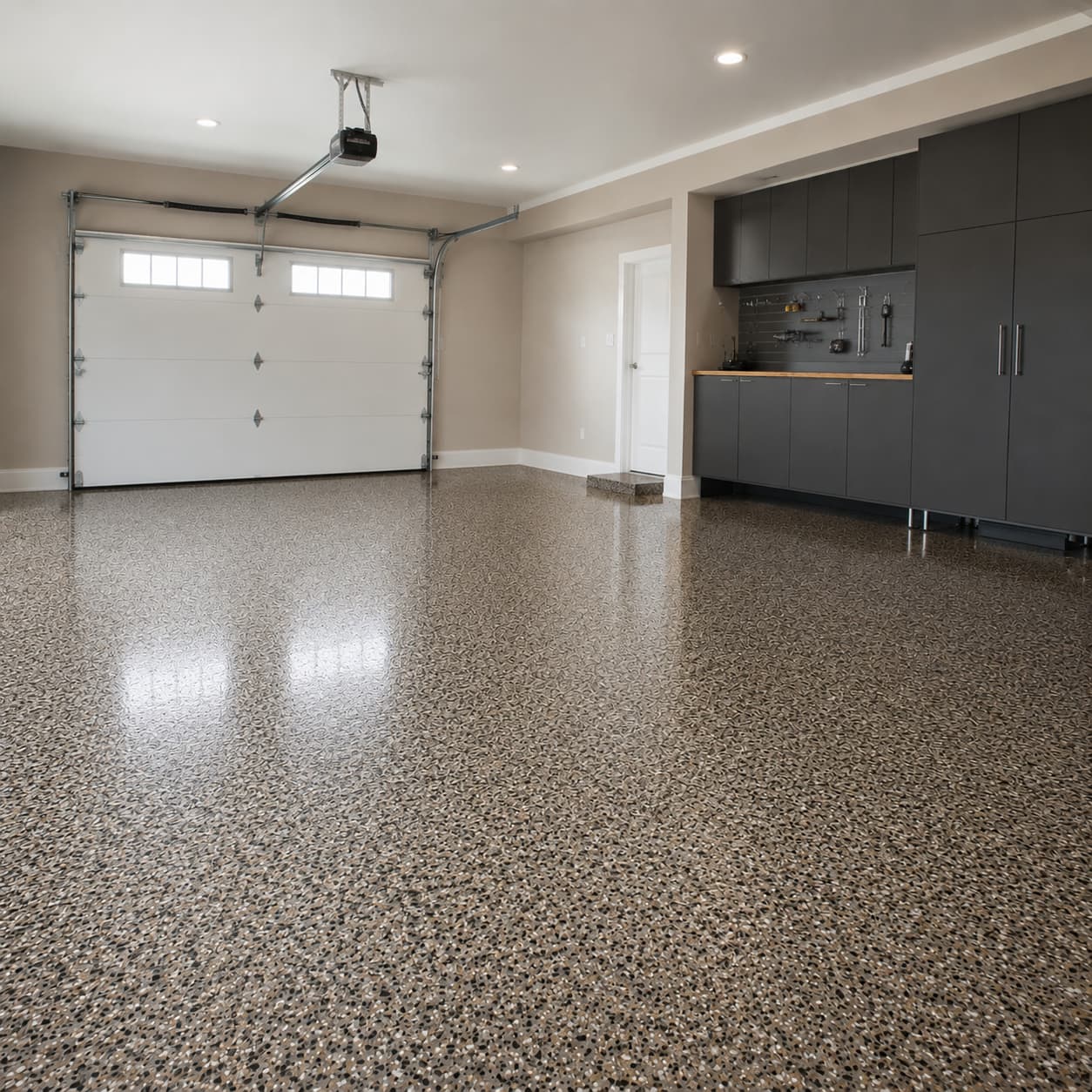
For many interior garage floors, a flake epoxy floor system is one of the most practical choices.
A flake floor can offer:
A clean finished look
Better visual texture
Added traction
Custom color blends
Dirt-hiding benefits
A durable surface for everyday garage use
Popular spaces for epoxy floors include:
Attached garages
Detached garages
Heated shops
Basements
Utility rooms
Laundry rooms
Pole barns
Storage rooms
Small commercial spaces
If the space is exposed to more extreme conditions, the coating system may need to be adjusted.
That is why the estimate process should include a conversation about how the space is actually used.
A garage that stores one SUV and a snow shovel is not the same as a shop with equipment, chemicals, moisture, and daily traffic.
Is Epoxy Slippery in the Winter?
It can be if the wrong finish is used.
A smooth, glossy floor can become slippery when wet, especially with snow melt or road slush.
That is why many garage floor systems use decorative flakes or texture to help improve traction.
For Midwest garages, traction should always be part of the conversation.
A garage floor should look good, but it should not turn into a curling rink every time snow melts off your tires. 🥌
Can Epoxy Stop Concrete From Cracking?
No. Epoxy can protect and improve the surface, but it does not stop structural movement.
If the concrete cracks because of settlement, movement, freeze-thaw damage, or structural issues, a coating cannot magically override physics.
What epoxy can do is help create a cleaner, more protected, more finished surface when the concrete is suitable for coating.
Cracks may be repaired or filled before installation, but no honest installer should promise that concrete will never move again.
That is not craftsmanship. That is fairy dust in a work truck.
How Long Does Garage Floor Epoxy Last?
The lifespan of a garage floor epoxy system depends on:
Concrete condition
Surface prep
Product system
Installation quality
Moisture levels
Traffic
Cleaning habits
Temperature conditions
Use of the space
A properly installed garage floor coating can last for years, but there is no one-size-fits-all answer.
An attached garage with normal homeowner use will usually have a very different lifespan than a commercial shop or exterior slab.
The best way to protect the investment is to choose the right system from the beginning.
How to Maintain an Epoxy Garage Floor in Winter
Once your garage floor is coated, basic maintenance helps keep it looking better longer.
Here are simple winter care tips:
Sweep up sand and grit regularly
Remove salty slush when possible
Mop with a mild cleaner when needed
Avoid harsh abrasive scrubbers
Do not let chemicals sit for long periods
Use mats carefully and avoid moisture-trapping rubber mats if recommended against
Keep snow and ice buildup under control
You do not have to baby the floor, but you should not completely ignore it either.
Think of it like a truck. Built to work, but still appreciates a wash now and then.
When Garage Floor Epoxy May Not Be the Right Fit
Epoxy is a great option for many floors, but it is not always the answer.
It may not be the best choice if:
The concrete has serious moisture problems
The slab is badly damaged
The surface is actively crumbling
The area is fully exterior and exposed
The floor has major movement issues
The wrong system would be required for the environment
A trustworthy installer should be willing to say, “This may not be the right coating for this situation.”
That kind of honesty matters.
Because the goal is not to sell epoxy to everyone.
The goal is to install the right surface for the right space.
Is Garage Floor Epoxy Worth It in Minnesota?
For many homeowners, yes.
Garage floor epoxy can be worth it if you want:
A cleaner-looking garage
Easier maintenance
Better protection for concrete
A more finished space
A durable coating for daily use
A garage that feels less like a storage cave
A floor that can handle snow, salt, mud, and Midwest mess better than bare concrete
It is especially worth considering if your garage, shop, basement, or utility space is part of your daily life and you want it to look and function better.
The key is choosing a system that fits the space.
Interior garage? Epoxy may be a great fit.
Exterior or harsh unheated area? You may need a different coating system, such as Diamond Coat or another product designed for tougher exposure.
That is the kind of guidance you should expect before moving forward.
Garage Floor Epoxy in Menahga and Midwest Minnesota
All Surface Epoxy provides custom epoxy floors for homeowners, cabins, garages, shops, and small businesses across:
Menahga, MN
Detroit Lakes, MN
Frazee, MN
Fargo, ND
Moorhead, MN
Alexandria, MN
Brainerd, MN
Bemidji, MN
Park Rapids, MN
Wadena, MN
Perham, MN
New York Mills, MN
Nearby Midwest Minnesota communities
With 20 years of concrete experience, Dereck brings a practical, hands-on understanding of the surface underneath the coating.
That matters.
Because a garage floor coating is only as good as the prep, product, and person installing it.
Final Answer: Can Garage Floor Epoxy Handle Midwest Winters?
Yes.
Garage floor epoxy can handle Midwest winters when it is installed correctly, over properly prepared concrete, in the right environment, with the right coating system.
It can help protect your concrete from everyday garage abuse, make cleanup easier, and give your garage, shop, or basement a clean finished look.
But not every slab is the same.
Salt damage, freeze-thaw cycles, hot tire pickup, spalling, and moisture vapor transmission all need to be considered before choosing a coating.
That is why working with someone who understands concrete matters.
If you are thinking about upgrading your garage floor, the best first step is simple:
Send photos, measurements, and a few details about how you use the space.
All Surface Epoxy will help you figure out what makes sense for your floor, your budget, and your Midwest winter reality.
Ready to Upgrade Your Garage, Shop, or Basement Floor?
Get a custom epoxy floor estimate from All Surface Epoxy.
Request a Free Estimate Today
Serving Menahga, Detroit Lakes, Frazee, Fargo, Moorhead, Alexandria, Brainerd, Bemidji, Park Rapids, Wadena, Perham, New York Mills, and nearby Midwest Minnesota communities.