Epoxy Flake Flooring: Is It Worth It for Minnesota Garages, Shops & Basements?
Epoxy Flake Flooring: Is It Worth It for Minnesota Garages,
Shops & Basements?
All Surface Epoxy | Menahga, Minnesota
Your garage floor probably works harder than most surfaces in your home.
It deals with muddy boots, oil drips, road salt, snow-covered tires, dropped tools, and whatever else the Minnesota seasons decide to throw at it.
Meanwhile, that plain concrete floor keeps collecting stains, dust, and cracks. Not exactly the finished garage you've been picturing.
That's where epoxy flake flooring comes in.
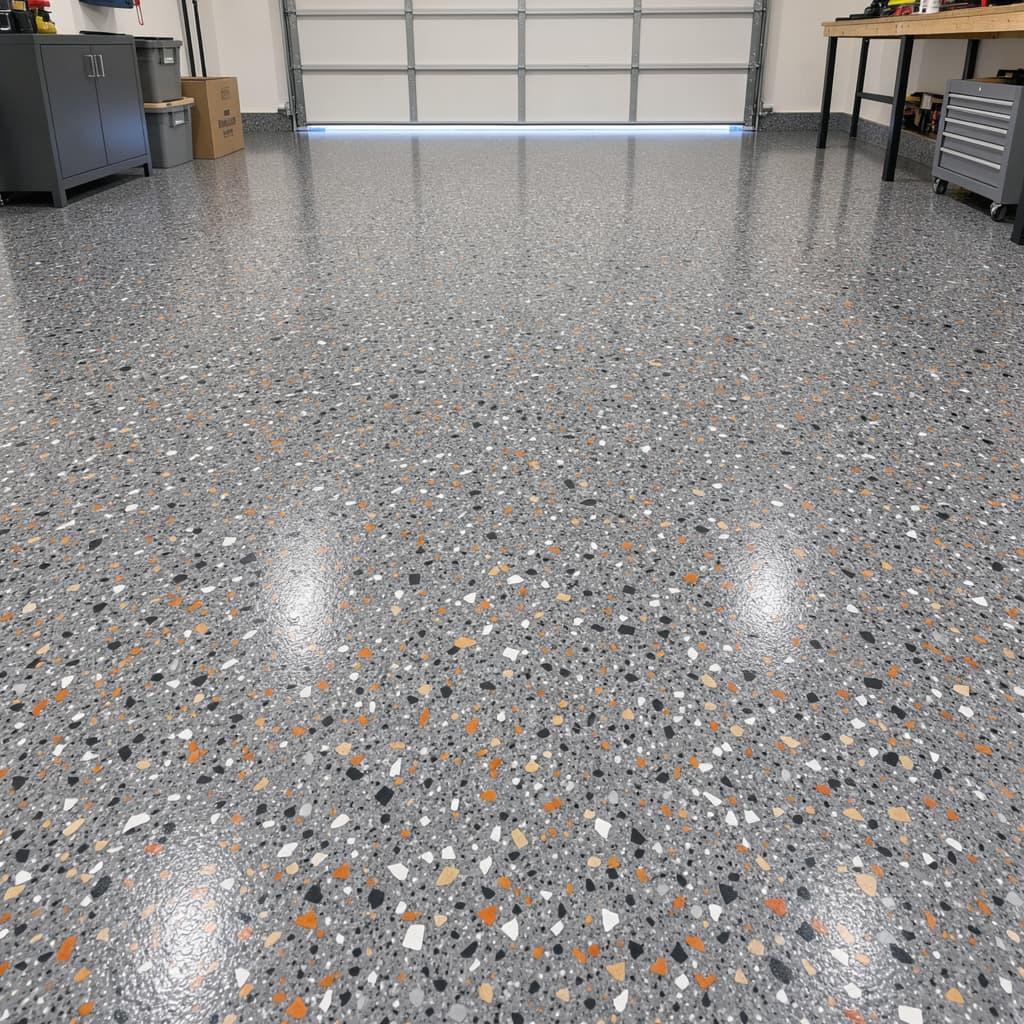
Epoxy flake flooring is a decorative, protective coating system applied over properly prepared concrete. Colored flakes are embedded into a resin coating and sealed with a protective topcoat, creating a durable, customizable floor that's easier to clean than bare concrete.
It's become a popular option for garages, workshops, basements, and other hardworking spaces.
But is it worth the investment? And what should Minnesota homeowners know before having it installed?
Let's break it down.
What Is Epoxy Flake Flooring?
Epoxy flake flooring, also called decorative flake flooring or chip flooring, is a multilayer floor coating system that combines durability with a custom finished appearance.
Unlike ordinary concrete paint, a professionally installed flake floor generally includes a prepared concrete surface, a resin base coat, decorative vinyl flakes, and a protective clear topcoat.
The colored flakes create that familiar speckled appearance you've probably seen in finished garages and showrooms.
Depending on the system, the flakes can be scattered lightly or broadcast across the entire floor for a fuller, more consistent appearance.
And the design options go well beyond basic gray.
You can choose blends of charcoal, black, white, brown, beige, or other complementary colors to match your garage, shop, or home.
The result is a surface that can look sharp enough for a showroom while still being practical for everyday use.
5 Reasons Homeowners Choose Epoxy Flake Flooring
1. It Makes an Ordinary Concrete Floor Look Finished
Let's face it. Bare concrete isn't winning many beauty contests.
A professionally installed flake floor can completely change the appearance of a garage, basement, or workshop.
Instead of a stained gray slab, you get a more polished, intentional look that complements the rest of your property.
Whether you prefer a modern charcoal blend or something warmer and more natural, flake flooring offers plenty of design flexibility.
2. It Makes Everyday Cleanup Easier
Concrete is porous. That means liquids, oils, dirt, and other contaminants can work their way into its surface.
A properly installed resin floor coating creates a more sealed, easier-to-clean surface.
For homeowners, that can mean less time fighting stubborn dirt, garage dust, and ordinary spills.
It's especially useful in Minnesota, where garages collect a steady supply of road grime from November through spring.
The floor still needs cleaning, of course. But sweeping and mopping a finished coating is generally much easier than trying to clean untreated concrete.
3. The Flake Pattern Helps Hide Everyday Dirt
One of the most underrated benefits of decorative flake flooring is its appearance between cleanings.
A solid-color floor can make every footprint, dust patch, and speck of dirt stand out.
A multicolored flake blend helps disguise minor dust, dirt, and normal visual wear.
That doesn't mean the floor magically cleans itself.
It just means your garage won't necessarily announce every muddy footprint to the entire neighborhood.
4. The Right System Can Provide Better Traction
Smooth, glossy floor coatings can become slippery when wet.
With decorative flake flooring, the finished texture can be adjusted by selecting an appropriate flake broadcast, topcoat, and traction additives.
This is especially important for garages where melting snow and rainwater are common.
Not every flake floor has the same slip resistance, so it's worth discussing the finish before installation.
For Minnesota garages, traction should be part of the plan, not an afterthought.
5. It Helps Protect the Concrete Underneath
An appropriate epoxy floor coating can help protect concrete from everyday moisture, dirt, and certain automotive contaminants.
But here's something worth understanding:
Epoxy doesn't fix bad concrete simply by covering it.
If the slab has severe moisture problems, deteriorating concrete, structural movement, or damaged areas, those conditions need to be evaluated first.
That's why professional surface preparation matters so much.
A beautiful finish needs a solid foundation.
Full-Broadcast vs. Partial-Broadcast Flake Flooring: What's the Difference?
Not all flake floors are installed the same way.
With a partial-broadcast flake floor, decorative flakes are scattered across a colored base coating. More of the underlying base color remains visible.
With a full-broadcast flake floor, flakes are applied heavily enough to cover the base coat, creating a dense, consistent decorative appearance.
After the flakes are applied, loose material is removed and an appropriate protective topcoat is installed.
Full-broadcast systems are popular for garages and shops because of their uniform appearance and range of available finishes.
But the best choice depends on the appearance you want, how the space is used, and the coating system being installed.
It's worth asking your installer exactly what layers and materials are included in the quote.
Where Does Epoxy Flake Flooring Work Best?
One of the biggest advantages of flake flooring is its versatility.
Residential Garages
Garages are one of the most common places for decorative flake floors.
They're exposed to vehicles, tools, dirt, snow, salt, and frequent use.
A properly selected coating system can create a cleaner-looking, more maintainable surface.
Workshops and Pole Barns
If you spend time working on vehicles, woodworking, hunting equipment, or projects in the shop, you know how quickly bare concrete gets dirty.
Flake flooring can create a more finished workspace that's easier to clean.
The right product system will depend on equipment loads, chemical exposure, temperature, and how the floor is used.
Basements and Utility Rooms
Flake floors aren't just for garages.
They can also be an option for basements, laundry rooms, storage areas, and utility spaces.
Before coating a basement floor, it's especially important to check for moisture problems and water intrusion.
Cabins and Lake Properties
Across Minnesota's lake country, garages and outbuildings often pull double duty as storage areas, workshops, recreational spaces, and places to clean up after a day outdoors.
Decorative flake flooring can be a practical upgrade for suitable concrete surfaces in those spaces.
Can Epoxy Flake Floors Handle Minnesota Winters?
Yes, the right professionally installed system can perform well in Minnesota garages, including spaces exposed to melting snow and road salt.
But the actual floor conditions matter.
A heated attached garage, an unheated detached garage, and an exterior concrete slab aren't necessarily candidates for the same coating system.
Temperature, concrete moisture, surface preparation, and the selected coating chemistry all affect installation and long-term performance.
A properly designed flake floor can help keep contaminants from directly penetrating sound concrete, but it cannot stop structural cracks or eliminate existing moisture problems.
And installation conditions matter just as much as winter use. The concrete and surrounding environment must meet the selected product's application and curing requirements.
Want a deeper look at the cold-weather side of things?
Read our related article: Garage Floor Epoxy: Can It Handle Midwest Winters?
How Is Professional Epoxy Flake Flooring Installed?
The exact installation process depends on the coating system and the condition of the concrete.
A typical professional installation includes these steps:
Inspect the concrete. Check for cracks, damaged areas, moisture concerns, contamination, and previous coatings.
Prepare the surface. Concrete is typically mechanically ground or otherwise prepared according to the coating manufacturer's requirements. Proper preparation creates the surface profile needed for adhesion.
Repair problem areas. Cracks, pits, or damaged spots may need appropriate repairs before coating.
Apply the base coating. A compatible resin coating is installed over the prepared concrete.
Broadcast decorative flakes. The selected vinyl flake blend is applied to the coating, either partially or to full coverage.
Finish with a protective topcoat. After removing loose flakes and preparing the surface as required, the floor is sealed with a suitable clear coating.
The floor then needs adequate curing time before foot traffic, vehicles, or equipment can return.
Some systems cure faster than others. Your installer should explain the specific waiting period before the project begins.
Why Concrete Experience Matters
There's a reason proper preparation gets mentioned so often.
A floor coating may look fantastic immediately after installation, but weak concrete, trapped moisture, contamination, or improper preparation can cause adhesion problems later.
At All Surface Epoxy, Dereck brings 20 years of concrete experience to his epoxy work.
Understanding the concrete underneath the finish is an important part of choosing the right approach for the project.
Because when you're investing in a custom floor, you want more than something that looks good in the first photograph.
How Much Does Epoxy Flake Flooring Cost in Minnesota?
This is usually one of the first questions homeowners ask.
And it's a fair one.
Published national pricing guides commonly place professionally installed epoxy flooring around $4–$10 per square foot, although decorative full-flake systems, concrete repairs, moisture mitigation, and premium coating materials can move a project outside that broad range.
That figure is general market guidance, not an All Surface Epoxy quote.
Your actual project cost will depend on the size and condition of your concrete, the preparation needed, the coating system selected, and the finish you choose.
For example, a clean, sound garage slab may need considerably less preparation than an older floor with oil contamination, spalling, and multiple cracks.
Those two floors may look similar in photos, but they can require very different amounts of work.
The best way to get an accurate quote is to provide your approximate square footage, photos of the concrete, and a few details about how the space is used.
That lets us evaluate the project rather than tossing out a number that may not reflect what your floor actually needs.
Flake Epoxy vs. Painted Concrete vs. Metallic Epoxy
Homeowners often compare these three finishes, but they serve somewhat different purposes.
Concrete Floor Paint
Concrete paint can be a lower-cost option for basic appearance improvements.
However, ordinary floor paint generally doesn't provide the same layered coating system, decorative flake coverage, or performance characteristics as a professionally specified resin floor.
It's important to compare the actual products, because not all paints or coatings are created equal.
Metallic Epoxy Flooring
Metallic epoxy is all about visual movement and design.
It can create flowing patterns that resemble polished stone, marble, or other artistic finishes.
It's popular in finished basements, showrooms, entertainment spaces, and areas where appearance is a major priority.
Decorative Flake Epoxy Flooring
Flake flooring tends to be a practical middle ground between appearance and everyday function.
It offers customizable color blends, visual texture, and a cleaner finished appearance while making sense for many garages, shops, and utility spaces.
For a busy residential garage, a full-flake system is often worth considering first.
The final decision should come down to your concrete, how you use the space, and the performance you need.
How Do You Maintain an Epoxy Flake Floor?
One of the biggest selling points of flake flooring is that routine maintenance is relatively simple.
Sweep or vacuum dirt, sand, and grit regularly.
Clean up oil, automotive fluids, and other spills promptly using cleaners approved for the specific coating.
For ordinary dirt, a soft mop and mild, manufacturer-recommended cleaning solution are often sufficient.
Avoid harsh abrasive pads or chemicals that may damage the topcoat.
In the winter, removing heavy salt deposits and standing slush helps maintain both the floor's appearance and walking conditions.
The goal isn't to baby your garage floor.
It's simply to care for it the same way you'd care for any other investment around your property.
Common Questions About Epoxy Flake Flooring
Is epoxy flake flooring slippery when wet?
It can be, depending on the finished texture. Decorative flakes, topcoat selection, and traction additives can be used to improve slip resistance. No floor should be assumed slip-proof, particularly when covered in water, oil, or slush.
Can epoxy flakes peel off the floor?
In a properly installed system, decorative flakes are embedded within the coating and protected by a topcoat. Flakes should not simply come loose during normal use. If the coating peels or delaminates, it may indicate an adhesion, substrate, moisture, or installation problem.
Can you install flake epoxy over old concrete?
Often, yes, provided the concrete is sound and can be properly prepared. Existing coatings, moisture problems, cracks, contamination, and deteriorated areas must be evaluated before installation.
How long before I can park my vehicle on a new flake floor?
That depends on the exact resin and topcoat system, temperature, humidity, and curing conditions. Some fast-curing systems allow earlier use than conventional systems. Always follow the installer's specific return-to-service instructions.
How long does an epoxy flake floor last?
A professionally installed system can provide years of service, but lifespan varies with concrete condition, product selection, installation quality, traffic, maintenance, and environmental exposure. There is no single guaranteed lifespan for every floor.
Is epoxy flake flooring worth the money?
For homeowners who want a cleaner-looking, more finished garage, workshop, or basement and whose concrete is suitable for coating, it can be a worthwhile investment. The biggest benefits are appearance, easier cleanup, customization, and protection of the underlying concrete.
Epoxy Flake Flooring in Menahga, Detroit Lakes & Surrounding Minnesota Communities
All Surface Epoxy is a locally owned business based in Menahga, Minnesota, serving homeowners and businesses across west-central and north-central Minnesota and the Fargo-Moorhead region.
Our service area includes Detroit Lakes, Frazee, Park Rapids, Wadena, Perham, New York Mills, Bemidji, Brainerd, Alexandria, Fargo, Moorhead, and surrounding communities.
Whether you're considering flake epoxy for your garage, workshop, pole barn, basement, or other concrete space, we'll help you explore the right options for your project.
With 20 years of concrete experience and a hands-on approach to craftsmanship, Dereck understands that a great epoxy floor starts long before the decorative flakes go down.
Learn more about our epoxy flooring and custom surface services.
Ready to Give Your Concrete Floor an Upgrade?
Your floor doesn't have to stay stained, dusty, and unfinished forever.
Whether you have a clear vision for your new garage floor or you're just starting to explore decorative flake options, we're happy to talk through what's possible.
Send us your project details, approximate measurements, and photos, and we'll help you figure out the next step.
Request Your Free Epoxy Flooring Quote
All Surface Epoxy | Custom Epoxy Floors, Countertops & Shower Walls | Menahga, MN